London, March 2026 — Field notes on a variable that rarely appears in nutritional guidance, though it shapes the post-meal experience more than most food writing acknowledges: the pace at which a lunch is eaten. Not what was on the plate, not how large the portion, but how long the sitting lasted and how much attention was given to it.
The hurried lunch and its afternoon
A lunch eaten in eight minutes, at a desk, between two meetings, produces a different afternoon than the same lunch eaten over twenty-five minutes in a quieter setting. This is an observation before it is an argument: the qualitative reports of writers, journalists, and office workers who have kept food journals for Lorvane Dispatch over the past year consistently note that the pace of a midday sitting correlates with the character of the afternoon that follows. Not perfectly, not in every case, but with enough regularity to warrant attention.
The mechanism is not entirely mysterious. Eating at pace reduces the time available for the body's natural processes of satiety signalling to register. The fullness response does not arrive instantaneously; it is a delayed signal that requires some minutes of digestion to build. A very rapid lunch, eaten before this signal can begin to form, frequently results in the consumption of more food than a slower lunch would produce — and more food, consumed rapidly, tends to be associated with greater post-meal heaviness and a more pronounced afternoon fatigue pattern.
"A week of recording lunch duration against afternoon focus quality. Lunches under twelve minutes: afternoon concentration noted as effortful in five of seven cases. Lunches of twenty minutes or more: afternoon concentration noted as settled in six of seven cases. Same food, broadly similar portions, different duration. The pattern held across the week."
— Eleanor Whitfield, Lorvane Dispatch field journal
Mindful lunch choices as an afternoon practice
The language of "mindful eating" has been adopted so widely by wellness publishing that it risks meaning very little. In the context of this publication, it is used in a specific and narrow sense: eating with enough attention to notice the food and enough time for the meal to register. This is not a practice that requires instruction or discipline; it is simply the ordinary act of pausing long enough to be present at the table.
The afternoon food routine that emerges from mindful lunch choices is, in practice, one that tends to be less reactive than one that does not include this kind of attention. A person who has eaten lunch deliberately — noting what they consumed, taking some time to do so, making choices about portion size with some awareness — tends to enter the afternoon with a clearer sense of how they feel physically. This clarity, in turn, appears to support a more consistent afternoon alertness pattern, even before any of the purely physiological influences of food composition are considered.

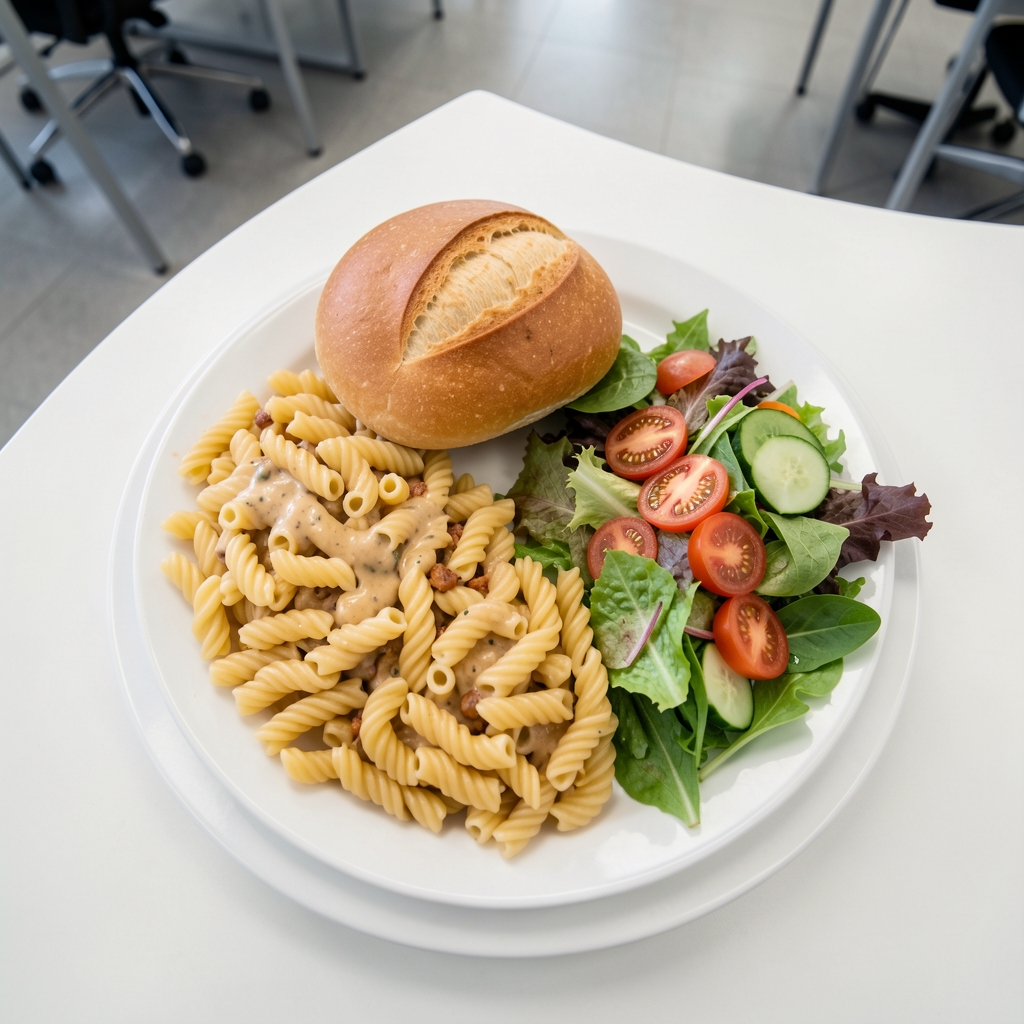
A simple, unhurried midday sitting — the kind associated most often with a settled afternoon in observational food journals.
Slow digestion and the afternoon energy pattern
A distinction is worth drawing here between two kinds of slow digestion. The first is the natural, productive slowing that occurs when a fibre-rich or protein-containing meal moves through the digestive system at its ordinary pace. This form of digestion is associated with a stable post-meal energy pattern and forms the basis of the recommendation, noted in earlier articles in this series, to include whole grains and legumes in the midday meal.
The second kind of slow digestion is the type associated with very large meals, eaten rapidly. Here the digestive system is managing a substantial volume of food that arrived quickly and requires considerable processing. The body's response to this kind of digestive load can include the heaviness and low energy that most people recognise as the post-large-lunch slump. The two varieties of slow digestion — one measured and productive, one heavy and effortful — produce very different afternoon experiences, and the pace and size of the eating sitting is a significant factor in which type occurs.
"The pace and size of the eating sitting is a significant factor in which type of post-meal experience occurs."
The working environment and eating pace
The constraint on eating pace in most urban working environments is structural rather than personal. A meeting culture that fills the lunch hour, hot-desk policies that make desk-based eating the only practical option, and canteen or delivery food that is formatted for fast consumption all work against the kind of deliberate, unhurried midday eating that the observational literature associates with better afternoon focus. Writing about eating pace without acknowledging these structural factors risks placing the entire burden of change on individual behaviour, which is neither fair nor productive.
What the field notes from contributors to this publication suggest is not that everyone should take a long, leisurely lunch — the working day does not accommodate this for most people — but that even modest increases in the time taken to eat can produce a perceptible shift in the afternoon. Moving from an eight-minute desk lunch to a fifteen-minute seated lunch, with the screen closed during that time, is a change that many contributors described as producing a noticeable difference in their afternoon energy and attention pattern. It is a small adjustment with a disproportionate effect, at least in the observational record assembled here.
- 01 Eating pace correlates with post-meal alertness in observational field journals, independently of food composition.
- 02 Very rapid lunches tend to be associated with heavier, more effortful afternoons in the contributor record assembled here.
- 03 Even modest increases in lunch duration — from under ten minutes to fifteen or more — are associated with improved afternoon focus in reported experience.
- 04 The structural working environment shapes eating pace significantly; individual change is constrained by these structural factors.
Protein and sustained energy at pace
One practical intersection between eating pace and food composition is worth noting. Protein and sustained energy are associated in the nutritional literature, as noted in previous articles in this series. When protein is eaten slowly — chewed adequately, consumed over a reasonable period — its moderating effect on post-meal energy appears to be more pronounced than when the same protein-containing foods are eaten very rapidly. This is partly a function of chewing and the initial stages of digestion that begin in the mouth; rapid eating reduces the contact time between food and the enzymes that begin breaking down protein.
This suggests that the relationship between lunch composition and afternoon performance is not purely about what is on the plate, but also about how that plate is engaged with. A protein-rich lunch eaten hurriedly may produce a less settled afternoon than a modest, balanced lunch eaten with attention and some degree of unhurriedness. The food choices and the eating context work together, and the two are not easily separated in practice. This is the argument for paying attention to both: not because perfect lunches produce perfect afternoons, but because considered midday eating habits, over time, tend to produce a more consistent and navigable afternoon energy pattern.